
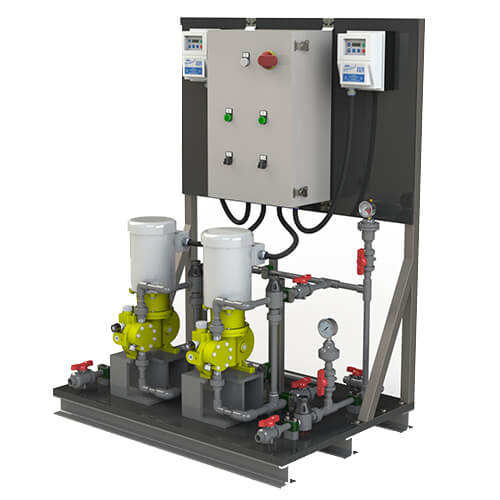
A chemical dosing pump is an essential device used in many industries to accurately inject chemicals into water, pipelines, or processing systems. Industries such as water treatment, wastewater management, pharmaceuticals, food processing, and chemical manufacturing rely heavily on a chemical dosing pump to ensure precise chemical dosing and consistent results.
A chemical dosing pump system helps control the exact amount of chemical required for different industrial processes. Whether it is used for water treatment, wastewater treatment, RO plants, or boiler systems, the correct chemical dosing pump improves efficiency, reduces waste, and ensures safe operations.
In this complete guide, we will explore the working principle, types, applications, installation, maintenance, and benefits of chemical dosing pumps.
What is a Chemical Dosing Pump?
A chemical dosing pump is a specialized pump designed to inject precise amounts of chemicals into a process stream. It is also known as a chemical metering pump or chemical injection pump because it delivers controlled volumes of chemicals such as chlorine, acids, alkalis, and other treatment solutions.
The primary function of a chemical dosing pump is to maintain accurate chemical concentration levels in water or industrial processes. Many industries prefer using an automatic chemical dosing pump because it offers reliable and consistent dosing without manual intervention.
A high-quality industrial chemical dosing pump ensures that chemicals are injected in the correct proportion, preventing overuse or underuse of chemicals in critical processes.
Chemical Dosing Pump Working Principle
Understanding the chemical dosing pump working principle helps industries choose the right system for their applications.
A chemical dosing pump works by moving a precise volume of liquid through a controlled mechanism. The pump draws chemical fluid from a storage tank and injects it into a pipeline or tank at a predetermined flow rate.
Most metering chemical dosing pumps operate using:
A diaphragm
A piston
Or a solenoid mechanism
The pump’s stroke length and speed determine the exact amount of chemical delivered. Many modern digital chemical dosing pumps come with advanced controllers that allow operators to adjust dosing levels automatically.
This precision is why chemical dosing pumps for water treatment and industrial processes are widely used.
Types of Chemical Dosing Pumps
Different industries require different types of chemical dosing pumps depending on their applications.
1. Diaphragm Chemical Dosing Pump
A diaphragm chemical dosing pump uses a flexible diaphragm to move chemicals through the pump. It is ideal for handling corrosive and hazardous chemicals.
2. Solenoid Chemical Dosing Pump
A solenoid chemical dosing pump uses electromagnetic force to move the diaphragm. These pumps are commonly used in water treatment systems because of their compact design.
3. Motor Driven Chemical Dosing Pump
A motor driven chemical dosing pump uses an electric motor to control the pumping action. It is widely used in large industrial chemical dosing pump systems.
4. High Pressure Chemical Dosing Pump
A high pressure chemical dosing pump is designed for applications where chemicals must be injected into high-pressure pipelines or industrial reactors.
Chemical Dosing Pump for Water Treatment
A chemical dosing pump for water treatment is one of the most common applications of dosing pumps. Water treatment plants use these pumps to inject chemicals such as chlorine, coagulants, and disinfectants into water systems.
Using the best chemical dosing pump for water treatment ensures:
Proper water disinfection
Balanced pH levels
Safe drinking water supply
Efficient chemical usage
A chemical dosing pump system in water treatment plants helps maintain water quality and ensures compliance with environmental standards.
Chemical Dosing Pump for Wastewater Treatment
A chemical dosing pump for wastewater treatment is essential for removing contaminants and maintaining safe discharge levels.
Wastewater treatment facilities use industrial chemical dosing pumps to inject chemicals like:
Coagulants
Flocculants
pH neutralizing agents
Accurate dosing helps separate harmful pollutants and improves the overall treatment process. A reliable chemical dosing pump for industrial applications ensures effective wastewater management.
Chemical Dosing Pump for RO Plant
A chemical dosing pump for RO plant plays a vital role in maintaining membrane performance and preventing scaling or fouling.
In reverse osmosis systems, the chemical dosing pump is used to inject:
Antiscalants
Chlorine
pH correction chemicals
Using a precision dosing pump system helps extend membrane life and improves filtration efficiency.
Chemical Dosing Pump for Boiler Water Treatment
Boiler systems require accurate chemical control to prevent corrosion and scale buildup. A chemical dosing pump for boiler water treatment ensures the correct addition of chemicals into the boiler feedwater.
These pumps inject:
Oxygen scavengers
Corrosion inhibitors
Scale control chemicals
A reliable metering chemical dosing pump protects boiler equipment and improves system efficiency.
Chemical Dosing Pump Installation Guide
Proper chemical dosing pump installation is essential for efficient operation.
Here are some basic steps:
Place the chemical dosing pump system near the chemical storage tank.
Install suction and discharge pipes properly.
Ensure the pump is mounted on a stable base.
Connect the chemical dosing pump with controller for automated dosing.
Test the pump before starting full operation.
Correct installation improves performance and reduces maintenance issues.
Chemical Dosing Pump Maintenance Tips
Regular chemical dosing pump maintenance is important for long-term reliability.
Important maintenance tips include:
Regularly inspect valves and seals
Clean chemical lines to avoid blockages
Check pump calibration periodically
Replace worn-out diaphragms
Monitor flow rate for accuracy
Proper maintenance ensures that the chemical dosing pump system continues to deliver accurate dosing.
Benefits of Using a Chemical Dosing Pump
Using a chemical dosing pump offers many advantages for industries.
1. Precise Chemical Injection
A precision dosing pump system ensures exact chemical dosage for industrial processes.
2. Improved Process Efficiency
An automatic chemical dosing pump reduces manual errors and improves productivity.
3. Cost Savings
Accurate dosing prevents chemical wastage and lowers operational costs.
4. Enhanced Safety
A chemical injection pump reduces the risk of handling hazardous chemicals manually.
5. Better Water Quality
Using a chemical dosing pump for water treatment ensures safe and clean water.
Chemical Dosing Pump Manufacturers and Suppliers
Many industries look for reliable chemical dosing pump manufacturers and chemical dosing pump suppliers to ensure quality equipment.
Top manufacturers offer:
Digital chemical dosing pumps
Motor driven chemical dosing pumps
High pressure chemical dosing pumps
Complete chemical dosing skid systems
If you are searching for chemical dosing pump manufacturers in India, choose suppliers that provide quality products, technical support, and reliable after-sales service.
Chemical Dosing Pump Price
The chemical dosing pump price depends on several factors, including:
Pump capacity
Material construction
Pressure rating
Automation features
Brand and manufacturer
Basic solenoid chemical dosing pumps are more affordable, while advanced digital chemical dosing pumps with controllers may cost more due to added functionality.
FAQs About Chemical Dosing Pump
1. What is a chemical dosing pump used for?
A chemical dosing pump is used to inject precise amounts of chemicals into water systems, pipelines, or industrial processes for treatment, disinfection, or chemical reactions.
2. How does a chemical dosing pump work?
The chemical dosing pump working principle involves drawing chemicals from a tank and injecting them into a process stream at a controlled flow rate using a diaphragm, piston, or solenoid mechanism.
3. Which industries use chemical dosing pumps?
Industries such as water treatment, wastewater treatment, pharmaceuticals, food processing, chemical manufacturing, and power plants commonly use chemical dosing pumps.
4. What chemicals are used in a chemical dosing pump system?
Common chemicals include chlorine, acids, alkalis, antiscalants, coagulants, corrosion inhibitors, and disinfectants.
5. How do I choose the best chemical dosing pump?
To select the best chemical dosing pump, consider factors such as flow rate, pressure requirements, chemical compatibility, automation features, and application type.